

“The Master said, “I transmit rather than innovate. I trust in and love the ancient ways. I might thus humbly compare myself to Old Peng.”
Analects 7.11
On September 24th, 2014, just days before the 2,565th anniversary of the birth of Confucius, Xi Jinping addressed an audience of the Master’s latter-day disciples at the fifth Congress of the International Confucian Association. Opening the conference at the Great Hall of the People, the Chinese president spoke of harmony, of peace, and of respect for the many and various cultures of the nations of the world. “Culture is the soul of a nation,” Xi remarked, according to China Daily. “If a country does not cherish its own thinking and culture, if its people lose their soul, no matter which country or which nation, it will not be able to stand.”
In drastic departure from his predecessors in the heyday of Chinese Communism, Xi promotes traditional values and is fond of quoting the Analects. Per China Daily, he has referenced Confucian sayings on the complementarity of learning and thinking, and the potential of others to serve as one’s teachers. As far as I can find, however, there is no report of Xi referencing Confucius’s rejection of innovation—but this is hardly surprising, for innovation, more so than “socialism with Chinese characteristics”, more so than any virtue term or slogan emerging from the nascent Confucian revival, is the watchword of the Chinese Communist Party in the present historical moment.
Late last year, I went on a field trip (—who knew grad school had such a thing—) to Hangzhou. Much to my surprise, we were not there to see the West Lake and learn about the Legend of the White Snake, but to visit tech company HQs. There the contemporary Chinese interest in innovation, chiefly technological, was on full display. The exhibition floor at Shining3D showcased the company’s efforts to apply 3D scanning technology to a wide range of sectors, from the automobile industry (for scanning cars for defects) to dentistry (for scanning patients’ mouths for misalignment). Promoting its products with engaging interactive demonstrations—we took turns being scanned or scanning each other—Shining3D promised both fun and utility through technological means. (I got to see a delightfully uncanny scan of my face, my pores glossed over with a plasticine sheen.) The Vision Valley Exhibition Hall, which we visited next, went even further to make fun out of tech, in a manner reminiscent of Disney’s Epcot or the Carousel of Tomorrow; following a promotional video screened in the lobby, the screen itself was revealed to be a pair of sliding doors, which opened onto a dark and sparsely lit “outer space”-themed hall displaying cutting-edge gadgets. Then came another interactive demonstration: our guides brought out a robot police dog, which would jump back and then race forward to meet its opponent upon being kicked (as the guides invited us to do).
These sites, Vision Valley in particular, represent one aspect of China’s current promotional efforts, one likewise exemplified by the videos of Chongqing’s industrial jungle one sees on Chinese and Western social media alike—namely, the push to present the new China as a site for the building of a future where digital technology and attendant infrastructure augments every aspect of we common people’s lives. Based on what I observed in Hangzhou, Chinese firms are keen to lean into such a tech-futurist turn in China’s nation-building and self-presentation. “Made in China”, the hope seems to be, will cease to function as a pejorative and instead become a mark of quality and—as I am stressing—innovation. Indeed, the state expressly endorses innovation as a guiding value; according to an October 2025 press release on the English website of the PRC State Council, for instance, Minister of Science and Technology Yin Hejun recently “pointed out that it is essential to strengthen original innovation and make breakthroughs in core technologies in key fields” in the context of the upcoming Five-Year Plan. (The word “innovation” appears a total of 17 times in said 872-word press release.) Confucius would hardly approve.
This contemporary enthusiasm for innovation notwithstanding, other destinations in the Hangzhou area reveal signs of the Chinese government’s present interest in transmitting “the ancient ways” of traditional Chinese culture—even where the line of transmission is broken or dubious. The Liangzhu Culture Museum offers a showcase of Chinese accomplishments in ancient archaeology, displaying material traces of a culture that flourished in present-day Zhejiang Province in the Neolithic period. The Liangzhu culture, being unknown before excavations in the twentieth century, is a fascinating object of study in its own right. Curiously, however, I noticed that the museum’s curatorial language presents this culture as an extension of Chinese civilization, despite being apparently unrelated to the recognizably Sinitic culture that would develop independently in the Yellow River basin. (Our guide claimed that one Liangzhu ritual artifact with a square base and a round top signified the ancient Chinese cosmological belief in a round Heaven and a square Earth. As I’ve heard one archaeologist in the field remark: “The Liangzhu people didn’t know about 天圆地方.2 They don’t care about what the 礼记3 said.”)
Of course, the assimilation of non- or pre-Sinitic cultures to a master narrative of Chinese history—and, in complement, the assimilation of internally diverse elements of Chinese culture to “Confucian” culture—serves the present regime’s interest in rehabilitating Confucian morality and attendant trappings of traditional culture. Allowing instead for a narrative of historical multiculturalism would, one might think, threaten the utility of the Confucian revival for nation-building. After all, in his remarks to the International Confucian Association (at least as translated), President Xi spoke not of multiple sources of national spirit—multiple constituent cultures—but of the (singular) culture of a nation. Without specifically Confucian culture, such remarks suggest, the Chinese nation “will not be able to stand.”

The Chinese government’s embrace of a “Confucian comeback”—however gradual and selective—is a welcome development to scholars such as Daniel A. Bell, who touts Chinese-style “political meritocracy” in the Confucian mould as a legitimate and attractive alternative to Western-style liberal democracy. Writes Bell: “reformist Confucians put forward political ideals that are meant to work better than Western-style democracy in terms of securing the interests of all those affected by the policies of the government, including future generations and foreigners. Their ideal is not a world where everybody is treated as an equal but one where the interests of non-voters would be taken more seriously than in most nation-centered democracies.”4 (Notably, the “reformist Confucians” to whom Bell refers are, as he presents them, intellectuals promoting a Confucian revival independently of the state, with some even appealing to Confucian values to advocate for such liberalizing measures as freedom of speech.)
When it comes to implementation, though, Bell locates the main opposing force to Confucian governance among old-guard Communist holdouts: “Elderly cadres, still influenced by Maoist antipathy to tradition, condemn efforts to promote ideologies outside a rigid Marxist framework.”5 But even if, as Bell forecasts, “increased emphasis on educated cadres is likely to generate more sympathy for Confucian values”6, I suspect that the rehydrated Confucianism of tomorrow will have to contend with another competitor ideology—the ideology of innovation, which is sustained not just by political rhetoric but also by economic incentives which are not so easily eliminated (not to mention the financial and political interests of the emerging Chinese tech elite themselves). If Confucianism is to be the once and future official ideology of the Chinese state, then the Confucian revivalist programme needs to assimilate not just the ghosts of altern culture outside Sinitic or Confucian tradition, such as Liangzhu, but also the technocratic “innovation” ideology. (Assuming, that is, that defeating the latter ideology is out of the question.)
Inconveniently, Confucian thought is (and this is, of course, a generalization) historically hostile to technological innovation. Going beyond Analects 7.1, Michael Puett argues that Confucius in the Analects maintains that the sages responsible for establishing culture “distill patterns and bring them to humanity, but they do not create.”7 Likewise, Mencius credits the sages with discerning the normative patterns of Heaven incipient in human nature and transmitting them to the common run of humankind: “What is common to all minds? Principle and propriety. The sages are simply the ones who first obtain what is common to our minds.”8 If the textual evidence Puett marshals is any indication, the sentiments of (at least early) Confucian thinking broadly run against technological development that presumes to improve upon nature. If that’s right, then it is hard to see how new tools like a robot police dog—as blatant a challenge to nature as ever there was—could fit into a Confucian-sanctioned ideological vision.
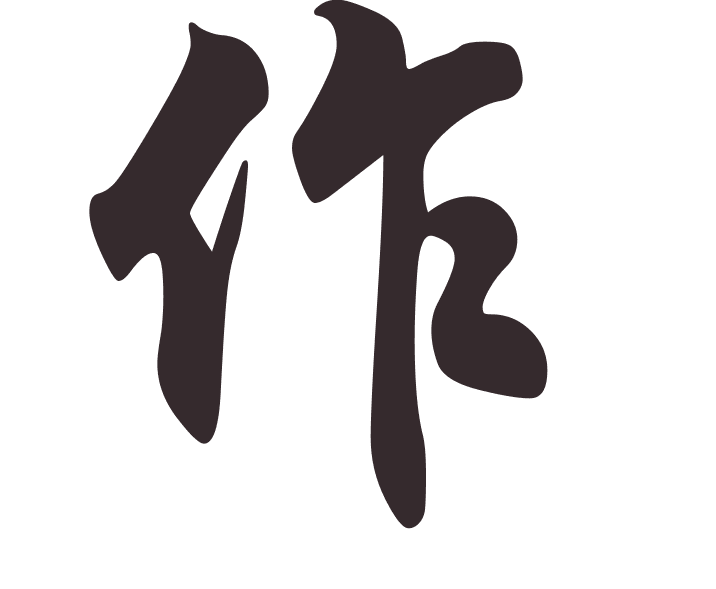
One strategy for promoters of traditional Chinese culture to respond to this ideology-forming obstacle would be to relax the commitment to Confucianism as such and instead look for inspiration in Chinese tradition in all its dizzying diversity. On this point, I have in mind the Mohists,9 who were to take aim at the Confucian privileging of nature over artifice, promoting a counternarrative in which “the sages are creators”10: “the sages created [zuowei] palaces and houses to be advantageous to life.”11 Denouncing the Confucians for holding that the superior man only transmits and does not create (作 zuo, the term rendered by Slingerland as “innovate”), the Mohists rather endorsed “transmitting the good things of the past and creating good things for the present.”12 As craftsmen and technical experts themselves, the Mohists no doubt would have been friendly to the ambitions of contemporary Hangzhou-based technologists to create new technologies that are, like houses and palaces before them, “advantageous to life.”
But I wouldn’t bet on a “Mohist moment” arriving in Xi’s China (even if that prospect were somehow to gain traction on Polymarket). The Chinese Dream is already haunted by enough ideological phantoms as it is.
Thanks for reading. Arriving Yesterday is a newsletter about thought and culture, with a special interest in China. See here for a reading of Zhuangzi’s happy fish parable, here for a travelogue on Chengdu and the Chinese political tradition (originally published on Chris Arnade Walks the World ), and here for an essay on love and anger in the Parable of the Prodigal Son.
Slingerland, Edward. (2003). Confucius: Analects. Hackett Publishing Company, pg. 64.
“Heaven round, earth square.”
The Record of Ritual, a Confucian classic.
Bell, Daniel A. 2010. “From Communism to Confucianism: China’s Alternative to Liberal Democracy,” NPQ, Spring, pg. 25.
Bell, “From Communism to Confucianism: China’s Alternative to Liberal Democracy,” pg. 19.
Bell, “From Communism to Confucianism: China’s Alternative to Liberal Democracy,” pg. 19.
Puett, Michael. (2001). The Ambivalence of Creation. Stanford University Press, pg. 50.
Mencius, qtd. in Puett, The Ambivalence of Creation, pg. 59.
Recommended: Ozy Brennan’s primer on the Mohist school here.
Puett, Michael. (2001). The Ambivalence of Creation. Stanford University Press, pg. 55.
Mozi, qtd. in Puett, The Ambivalence of Creation, pg. 54; brackets in original.
Mozi, qtd. in Puett, The Ambivalence of Creation, pg. 43.
You know, having the opportunity to listen to both outside "experts" opine on China strategy and China's leaders, a stark dividing line appears: for outsides, it can seem China's history started in 1950.